High Court appoints administrators to West Ealing Persian restaurant operator
Persian Palace Limited, a Persian restaurant on Uxbridge Road in West Ealing, was placed into administration by the High Court on 15 May 2026, with NatWest holding an outstanding charge.
Information for general guidance, drawn from the public record. Not legal, financial, or insolvency advice. If you are affected by an insolvency, consult a licensed practitioner or qualified solicitor.

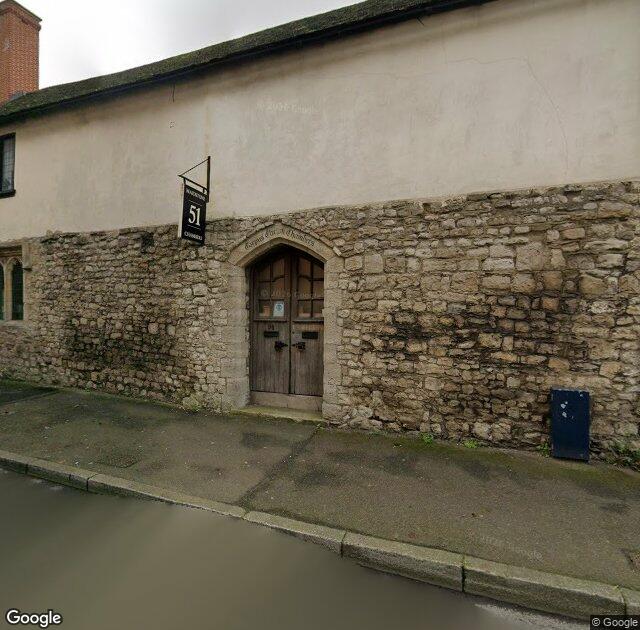
The High Court of Justice sealed the appointment of administrators to Persian Palace Limited on 15 May 2026, under case reference CR-2026-003571. The company runs an unlicensed restaurant and cafe on Uxbridge Road, West Ealing, and has traded from that address since its incorporation in July 2009.
Administration is a formal insolvency process in which licensed insolvency practitioners take control of a company to rescue it, sell it as a going concern, or realise its assets for creditors. The appointment was made through the High Court rather than by the directors or a qualifying charge holder out of court. Court records show an application to appoint an administrator was filed on 8 May 2026, a week before the appointment was confirmed.
The administrators' names are not recorded in the notice data available at the time of publication.
The director and company background
Seyed Mohammad Hosseiny Sanaye has been the sole active director since the company was incorporated on 9 July 2009. Barbara Kahan was also appointed on that date but resigned the same day. The company's most recent accounts were made up to 30 September 2024 and filed as micro-entity accounts.
Public records show Persian Palace Limited was dissolved via compulsory strike-off on 7 November 2023. Companies House data now lists the company as active, which indicates it was restored to the register before the administration application was filed in May 2026. The circumstances of the restoration are not detailed in the available data.
Secured lender
National Westminster Bank PLC holds an outstanding registered charge over the company, created on 7 October 2014 and delivered to Companies House on 14 October 2014. As a secured creditor, one whose debt is backed by a charge over the company's assets, NatWest ranks ahead of unsecured creditors in any distribution of realisations.
For creditors and customers
Once administrators are appointed, they issue statutory communications and payment instructions to known creditors in due course. Creditors wishing to evidence what they are owed do so by submitting a proof of debt, the formal claim form used in insolvency proceedings to record the amount a creditor says is outstanding.
From the moment of appointment, a moratorium under Schedule B1, paragraph 43 of the Insolvency Act 1986 takes effect. This pauses most creditor enforcement action, so creditors generally cannot start or continue court proceedings against the company without the court's permission.
Customers holding paid-but-undelivered orders or deposits rank as unsecured creditors in the administration, placing them behind secured and preferential creditors in the distribution hierarchy.
Employee claims for unpaid wages, notice pay and statutory redundancy are treated as preferential or unsecured debts depending on their nature. The Redundancy Payments Service, a government body, exists to meet certain statutory entitlements where an employer cannot pay, and then recovers what it can from the insolvent estate.
Common questions
Are you owed money by Persian Palace Limited?
You are an unsecured creditor unless you hold a registered charge or retention of title. The administrators will write to known creditors in due course with a proof-of-debt form and timetable for the first meeting. Until that letter arrives, no formal action is required from you. Read more about proof of debt and where you sit in the creditor hierarchy.
Did you work at Persian Palace Limited?
Wages owed up to a statutory cap, holiday pay, notice pay and redundancy may be claimable from the Redundancy Payments Service if the company is unable to pay. The administrators will normally coordinate the RP1 claim with the affected staff. See gov.uk: your rights if your employer is insolvent.
Do you hold a deposit, gift card or undelivered order from Persian Palace Limited?
Customers with paid-but-undelivered orders, gift cards or deposits typically rank as unsecured creditors. Where you paid by credit card and the amount was over £100, Section 75 of the Consumer Credit Act 1974 may let you claim from the card issuer for breach of contract or misrepresentation by the supplier; the rules apply per item, not per transaction, and the card must be a regulated credit card. Debit-card payments may be recoverable via chargeback.
Are you a director of a company connected to Persian Palace Limited?
Watch for Section 216 of the Insolvency Act 1986 if you intend to keep trading under a similar name in a successor company. The rule prohibits a director of a liquidated company from being involved in another company using the same or a similar name for five years, unless one of the statutory exceptions applies. Read more about Section 216.
Sources
- The London Gazette notice (code Appointment of Administrators)
- Companies House record 06957250
- Court: High Court of Justice
- Editorial standards: how we source and review; five-pass pipeline.