Administrators appointed at The Art Academy, the Borough High Street fine-art college founded in 1999
Joint administrators from Crowe UK LLP were appointed to The Art Academy on 12 May 2026, leaving students facing transfer as the Borough High Street fine-art college enters administration.
Information for general guidance, drawn from the public record. Not legal, financial, or insolvency advice. If you are affected by an insolvency, consult a licensed practitioner or qualified solicitor.
Mark Holborow and Steven Edwards of Crowe UK LLP were appointed joint administrators of The Art Academy, the specialist fine-art college on Borough High Street in London SE1, on 12 May 2026.
The High Court of Justice, Business and Property Courts in England and Wales, Insolvency and Companies List, sealed the appointment under case number CR-2026-003689. Administration is a formal insolvency process in which licensed insolvency practitioners take control of a company to rescue it, sell it as a going concern, or realise its assets for creditors. The authorisation was signed on 14 May 2026, and the notice appeared in the London Gazette on 20 May 2026.
The college
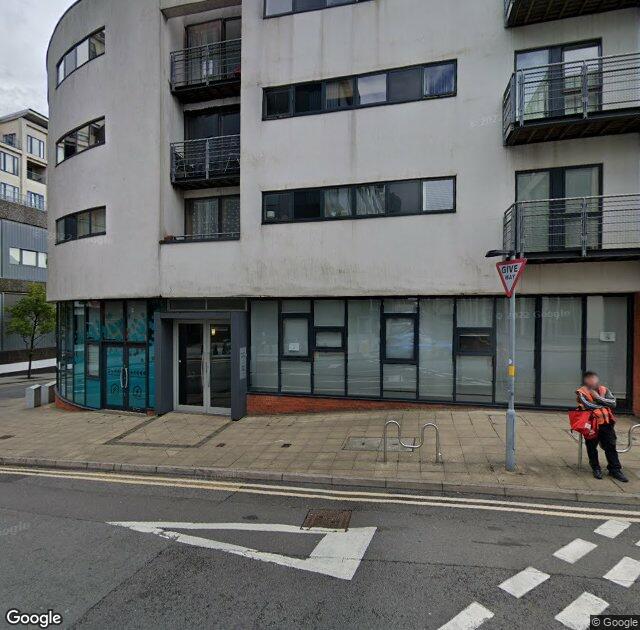
The Art Academy was incorporated on 6 July 1999 under the name The Sculpture Academy, changing to its current name in January 2003. It is a private company limited by guarantee, a structure commonly used by charities and not-for-profit educational bodies. Its SIC codes cover post-16 technical and vocational education and higher education, reflecting a curriculum of studio-based fine-art tuition. The academy operates from Mermaid Court, 165A Borough High Street, London SE1.
The most recent accounts filed at Companies House were made up to 31 August 2024. The academy is working to transfer its students to other institutions following the appointment.
The administrators
Holborow holds IP number 22834 and Edwards holds IP number 26090. An IP number is the licence number issued by an insolvency practitioner's recognised professional body, identifying the individual. Both are based at Crowe UK LLP's office at Medway Bridge House, 1-8 Fairmeadow, Maidstone, Kent, ME14 1JP. Joint administrators are two or more insolvency practitioners appointed to act together, though either can generally act alone unless the appointment specifies otherwise.
The directors
The directors at the time of the administration notice were Abimbola Oluwakemi Apalara, Amanda Bright, Alan Duncan Custis, Damian Joseph Fennell, Melanie Ruth Clare Gerlis, Timothy James Gledstone, Paul Mulholland and Robert Pepper. Seyed Mohammad Amir Zahedi has served as company secretary since the academy's incorporation in 1999.
Secured lender
National Westminster Bank PLC holds an outstanding registered charge over the academy's premises, created on 15 October 2015. The charge takes the form of a legal mortgage over the freehold interest in 165A Borough High Street, London SE1 1HR (Land Registry title SGL285527) and 169A Borough High Street, London SE1 1HR (Land Registry title SGL318475). A secured creditor is one whose debt is backed by a charge over company assets, placing them ahead of unsecured creditors in any distribution.
For students, suppliers and creditors
Once administrators are appointed, they issue statutory communications and payment instructions to known creditors in due course. Correspondence with the joint administrators is conducted through Crowe UK LLP at the Maidstone address above.
Creditors wishing to establish the amount owed to them do so by submitting a proof of debt, the formal claim form used in insolvency proceedings to record the size of a creditor's claim.
The appointment triggers a moratorium under Schedule B1, paragraph 43 of the Insolvency Act 1986, which pauses most creditor enforcement action. Creditors generally cannot start or continue court proceedings against the academy without the court's permission while the moratorium is in place.
Students who have paid tuition fees or deposits for courses that may not now be delivered rank as unsecured creditors in the administration, sitting behind secured and preferential creditors in the order of distribution. The academy's reported efforts to arrange student transfers may affect the practical outcome for those enrolled.
Employee claims for unpaid wages, notice pay and statutory redundancy are handled as preferential or unsecured claims depending on their nature. The Redundancy Payments Service, operated by the Insolvency Service, processes statutory redundancy payments and certain other employment-related claims where an employer is insolvent.
Common questions
Are you owed money by The Art Academy?
You are an unsecured creditor unless you hold a registered charge or retention of title. The administrators will write to known creditors in due course with a proof-of-debt form and timetable for the first meeting. Until that letter arrives, no formal action is required from you. Read more about proof of debt and where you sit in the creditor hierarchy.
Did you work at The Art Academy?
Wages owed up to a statutory cap, holiday pay, notice pay and redundancy may be claimable from the Redundancy Payments Service if the company is unable to pay. The administrators will normally coordinate the RP1 claim with the affected staff. See gov.uk: your rights if your employer is insolvent.
Do you hold a deposit, gift card or undelivered order from The Art Academy?
Customers with paid-but-undelivered orders, gift cards or deposits typically rank as unsecured creditors. Where you paid by credit card and the amount was over £100, Section 75 of the Consumer Credit Act 1974 may let you claim from the card issuer for breach of contract or misrepresentation by the supplier; the rules apply per item, not per transaction, and the card must be a regulated credit card. Debit-card payments may be recoverable via chargeback.
Are you a director of a company connected to The Art Academy?
Watch for Section 216 of the Insolvency Act 1986 if you intend to keep trading under a similar name in a successor company. The rule prohibits a director of a liquidated company from being involved in another company using the same or a similar name for five years, unless one of the statutory exceptions applies. Read more about Section 216.
Sources
- The London Gazette notice (code Appointment of Administrators)
- Companies House record 03801729
- Court: High Court of Justice, Business and Property Courts in England and Wales, Insolvency and Companies List,, case CR-2026-003689
- Editorial standards: how we source and review; five-pass pipeline.