Gouqi restaurant operator Tong Dinner Ltd enters administration
Tong Dinner Ltd, trading as Gouqi at Cockspur Street in central London, was placed into administration by the High Court on 15 May 2026. See the appointed administrators and registered charges.
Information for general guidance, drawn from the public record. Not legal, financial, or insolvency advice. If you are affected by an insolvency, consult a licensed practitioner or qualified solicitor.
Gouqi, a licensed restaurant at 25-34 Cockspur Street in central London, entered administration on 15 May 2026 after the High Court of Justice sealed the appointment of joint administrators under court number CR-2026-0003799.
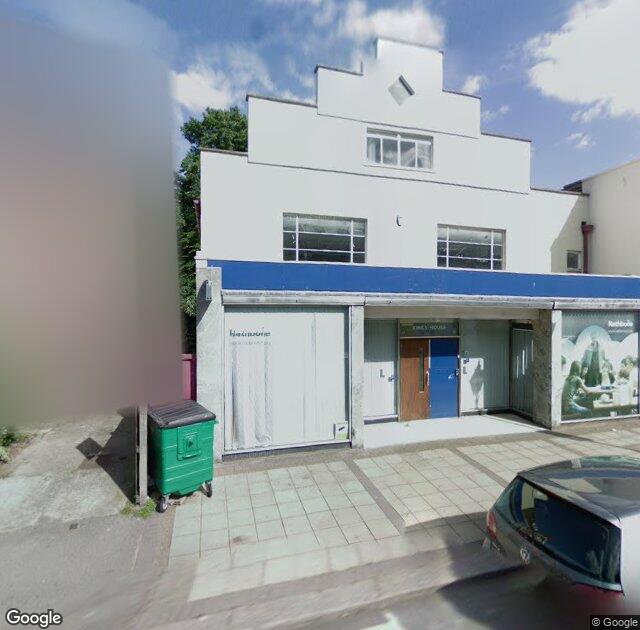
The company behind the restaurant, Tong Dinner Ltd, was incorporated in April 2021 and has a registered office at Kings House, 1A Kings Road, London SW19 8PL. Its principal trading address is the Cockspur Street site near Trafalgar Square.
The administrators
Ben Stanyon and Anthony Peter Davidson, both of Opus Restructuring LLP, were appointed as joint administrators. Administration is a formal insolvency process in which licensed insolvency practitioners take control of a company to try to rescue it, sell it as a going concern, or realise its assets for creditors. Stanyon, who holds IP number 25710, is based at Opus Restructuring LLP's Maidstone office at First Floor, Milwood House, 36B Albion Place, Maidstone, Kent ME14 5DZ. Davidson, who holds IP number 11730, operates from the firm's London office at 322 High Holborn, London WC1V 7PB.
Either joint administrator may act independently unless the terms of the appointment specify otherwise. Creditors and other parties can contact the joint administrators on 01622 427 433, with Bethany Tuffs named as an alternative contact.
The officers
Chee Hwee Tong is the director of Tong Dinner Ltd, having been appointed on 14 April 2021 when the company was incorporated. Tong is resident in England.
Secured charges
No outstanding secured charges are registered against Tong Dinner Ltd at Companies House, meaning there are no secured creditors with a prior claim over the company's assets ahead of the general body of creditors.
Background
Tong Dinner Ltd's most recent accounts were made up to 31 March 2025 and were filed as total exemption full accounts, the format available to smaller companies. The company's SIC codes cover licensed restaurants and the letting of other non-residential property. The next accounts are due by 31 December 2026, though the administration process may affect that timetable.
Common questions
Are you owed money by Tong Dinner Limited?
You are an unsecured creditor unless you hold a registered charge or retention of title. The administrators will write to known creditors in due course with a proof-of-debt form and timetable for the first meeting. Until that letter arrives, no formal action is required from you. Read more about proof of debt and where you sit in the creditor hierarchy.
Did you work at Tong Dinner Limited?
Wages owed up to a statutory cap, holiday pay, notice pay and redundancy may be claimable from the Redundancy Payments Service if the company is unable to pay. The administrators will normally coordinate the RP1 claim with the affected staff. See gov.uk: your rights if your employer is insolvent.
Do you hold a deposit, gift card or undelivered order from Tong Dinner Limited?
Customers with paid-but-undelivered orders, gift cards or deposits typically rank as unsecured creditors. Where you paid by credit card and the amount was over £100, Section 75 of the Consumer Credit Act 1974 may let you claim from the card issuer for breach of contract or misrepresentation by the supplier; the rules apply per item, not per transaction, and the card must be a regulated credit card. Debit-card payments may be recoverable via chargeback.
Are you a director of a company connected to Tong Dinner Limited?
Watch for Section 216 of the Insolvency Act 1986 if you intend to keep trading under a similar name in a successor company. The rule prohibits a director of a liquidated company from being involved in another company using the same or a similar name for five years, unless one of the statutory exceptions applies. Read more about Section 216.
Sources
- The London Gazette notice (code Appointment of Administrators)
- Companies House record 13332576
- Court: High Court of Justice
- Editorial standards: how we source and review; five-pass pipeline.