ESE Capital-linked fund Castle Donnington Limited placed into administration
Castle Donnington Limited, a fund vehicle formerly managed by ESE Capital Limited, has been placed into administration by the High Court, with joint administrators appointed on 12 May 2026.
Information for general guidance, drawn from the public record. Not legal, financial, or insolvency advice. If you are affected by an insolvency, consult a licensed practitioner or qualified solicitor.
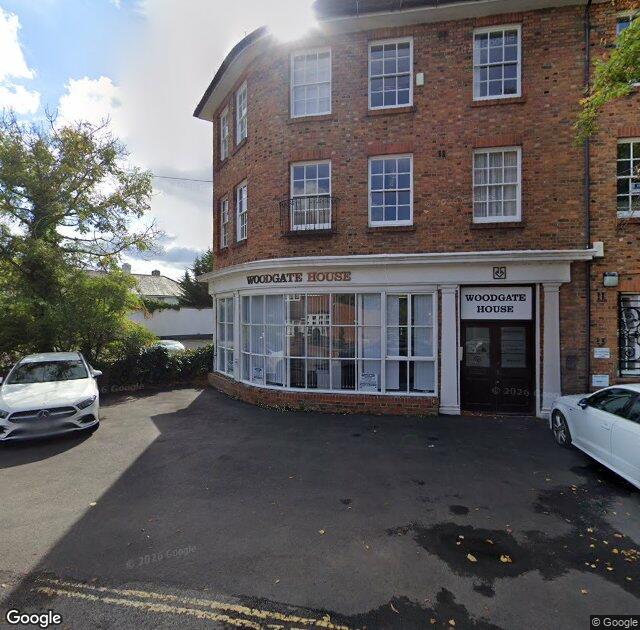
Castle Donnington Limited, one of the fund vehicles that ESE Capital Limited disclosed to the Financial Conduct Authority before ESE itself entered liquidation, has been placed into administration. The High Court of Justice sealed the appointment on 12 May 2026, with Adam Price of CMB Partners UK Limited and Ben Stanyon of Opus Restructuring LLP named as joint administrators.
Administration is a formal insolvency process in which licensed insolvency practitioners take control of a company to try to rescue it, sell it as a going concern, or realise its assets for creditors. Joint administrators are two or more insolvency practitioners appointed to act together, though either can typically act alone unless the appointment specifies otherwise.
The company
Castle Donnington Limited was incorporated on 3 April 2017 and is classified under SIC code 66300, which covers fund management activities. Its registered office is at Woodgate House, 2-8 Games Road, Cockfosters, Hertfordshire, EN4 9HN. The company filed its last accounts as a micro-entity, made up to 30 September 2023.
The sole director at the time of the administration notice was Gregory Samuel Baker, who has held the role since incorporation. Christopher Robert Merriman was also a director from incorporation but resigned on 29 February 2024.
The ESE Capital connection
The FCA published a notice when ESE Capital Limited entered liquidation confirming that ESE had notified the regulator of the funds it managed. Castle Donnington Limited appeared on that list alongside a number of other vehicles, including Cadnam Management Ltd, College Wood Farm Phase 1 Limited, Clopton Fields Management Limited, Cam Land (Dursley) Limited, Badby Limited, Newington (Sittingbourne) Ltd, Warden Bay Sheppey Ltd and Fordwich (Well Lane) Ltd. At least one other fund on the same list, The Barony NP (UK) Ltd, had already entered administration when the FCA notice was published. Castle Donnington's administration is therefore part of a broader unwinding of ESE Capital's fund portfolio following the manager's own collapse.
The administrators
Price holds IP number 25050 and practises through CMB Partners UK Limited, whose address for correspondence in this matter is 49 Tabernacle Street, London, EC2A 4AA. Stanyon holds IP number 25710 and practises through Opus Restructuring LLP, based at First Floor, Milwood House, 36B Albion Place, Maidstone, Kent, ME14 5DZ. An IP number is the licence number issued by an insolvency practitioner's recognised professional body, identifying the individual practitioner.
The court reference for the case is CR-2026-003681.
Secured lenders
No charges are registered against Castle Donnington Limited at Companies House, meaning there are no secured creditors in the conventional sense. With no floating or fixed charge holder in place, the administrators will distribute any realisations in accordance with the statutory order of priority.
A floating charge is a type of security over assets that change from time to time, such as cash or debtors, while a fixed charge attaches to a specific identified asset. Neither applies here.
What this means for creditors and investors
Once administrators are appointed, they assume control of the company and its affairs. Known creditors can expect to receive statutory communications from Price and Stanyon in due course, with correspondence conducted through the firms and contact addresses listed on the Gazette notice.
The formal mechanism by which a creditor evidences what it is owed is called a proof of debt, a claim form submitted to the administrators setting out the amount and nature of the liability. That process applies to all unsecured creditors as a standard feature of administration.
From the moment of appointment, the moratorium under Schedule B1, paragraph 43 of the Insolvency Act 1986 takes effect. The moratorium is the legal pause on most creditor enforcement action once a company is in administration: creditors cannot generally start or continue court proceedings, or take steps to enforce security or repossess goods, without the permission of the court or the administrators.
Given that Castle Donnington is a fund management vehicle, the creditor pool is likely to include investors who placed money into the fund. Those investors, along with any trade creditors, will rank as unsecured creditors in the absence of any registered charge. Unsecured creditors are those whose debts are not backed by a charge over the company's assets, and they rank behind the costs of the administration and any preferential creditors when realisations are distributed.
Where employees are owed wages, notice pay or redundancy, those claims are treated as preferential in part and the remainder ranks as unsecured. The Redundancy Payments Service, administered by the Insolvency Service, exists to meet certain statutory entitlements where an employer cannot pay them directly. Whether any employees are affected in this case is not confirmed by the available data.
The case reference CR-2026-003681 can be used to track further court filings as the administration progresses.
Common questions
Are you owed money by Castle Donnington Limited?
You are an unsecured creditor unless you hold a registered charge or retention of title. The administrators will write to known creditors in due course with a proof-of-debt form and timetable for the first meeting. Until that letter arrives, no formal action is required from you. Read more about proof of debt and where you sit in the creditor hierarchy.
Did you work at Castle Donnington Limited?
Wages owed up to a statutory cap, holiday pay, notice pay and redundancy may be claimable from the Redundancy Payments Service if the company is unable to pay. The administrators will normally coordinate the RP1 claim with the affected staff. See gov.uk: your rights if your employer is insolvent.
Do you hold a deposit, gift card or undelivered order from Castle Donnington Limited?
Customers with paid-but-undelivered orders, gift cards or deposits typically rank as unsecured creditors. Where you paid by credit card and the amount was over £100, Section 75 of the Consumer Credit Act 1974 may let you claim from the card issuer for breach of contract or misrepresentation by the supplier; the rules apply per item, not per transaction, and the card must be a regulated credit card. Debit-card payments may be recoverable via chargeback.
Are you a director of a company connected to Castle Donnington Limited?
Watch for Section 216 of the Insolvency Act 1986 if you intend to keep trading under a similar name in a successor company. The rule prohibits a director of a liquidated company from being involved in another company using the same or a similar name for five years, unless one of the statutory exceptions applies. Read more about Section 216.
Sources
- The London Gazette notice (code Appointment of Administrators)
- Companies House record 10704315
- Court: High Courts of Justice
- Editorial standards: how we source and review; five-pass pipeline.