Four-decade Ealing storage business enters administration with Hudson Weir appointment
Kevin Weir of Hudson Weir Limited was appointed administrator to Nationwide Self-Storage Limited on 11 May 2026 after a High Court order sealed the appointment.
Information for general guidance, drawn from the public record. Not legal, financial, or insolvency advice. If you are affected by an insolvency, consult a licensed practitioner or qualified solicitor.
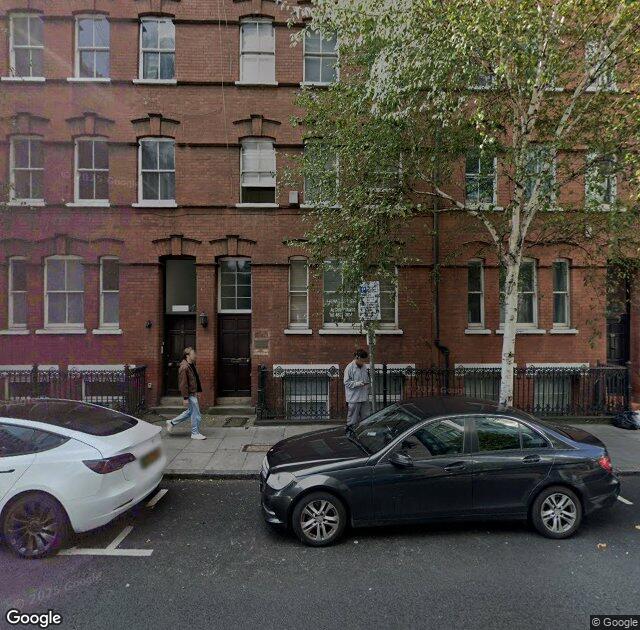
Nationwide Self-Storage Limited, which has operated a self-storage facility at 620 Western Avenue, Ealing under the trading name Nationwide Storage since its incorporation in September 1984, entered administration on 11 May 2026. The High Court of Justice, Business and Property Courts of England and Wales, Insolvency and Companies List (ChD) sealed the appointment under court number CR-2026-003617.
The company operates warehousing and storage facilities for land transport activities, classified under SIC code 52103. Its registered office has since been updated to care of Hudson Weir Ltd, 56 Leman Street, London, E1 8EU.
The administrator
Kevin Weir of Hudson Weir Ltd has been appointed sole administrator. Weir holds IP number 9332, the licence issued by his recognised professional body confirming him as a qualified insolvency practitioner. Administration is a formal insolvency process in which a licensed insolvency practitioner takes control of a company to attempt to rescue it, sell it as a going concern, or realise its assets for creditors.
The appointment was published in The Gazette on 13 May 2026, two days after it took effect.
The officers
The sole active director at the time of the administration notice was Darryl John William Sutherland, a United Kingdom resident. The corporate secretary at the time was Praxis Secretaries (UK) Limited, appointed to that role on 11 February 2020. Earlier directors, including Colin Baker, who resigned in May 1999, Denis Stanley Milne and Nichola Andrew Milne, both of whom resigned in December 1994, and David Frank Mitchell, who resigned in January 1993, held no role at the time of the appointment.
Background
The company filed its last accounts to 31 December 2024 under the total-exemption-full regime, available to smaller companies. Those accounts were filed without a full audit. The business had been continuously active on Companies House for more than 41 years before the administration appointment.
For customers, suppliers and creditors
Once administrators are appointed, statutory communications and payment instructions to known creditors are issued by the administrator in due course. All correspondence is conducted through Hudson Weir Ltd at 56 Leman Street, London, E1 8EU.
Creditors wishing to record amounts owed to them do so by submitting a proof of debt, the formal claim form used in the administration process to record the sum a creditor says is outstanding.
The appointment triggers a moratorium under Schedule B1, paragraph 43 of the Insolvency Act 1986, the part of the Act that governs administration in England and Wales. The moratorium pauses most creditor enforcement action, meaning creditors generally cannot start or continue court proceedings against the company without the court's permission.
Customers who have paid deposits or hold prepaid storage agreements but have not yet received the benefit of those arrangements rank as unsecured creditors in the administration. Unsecured creditors are those whose debts are not backed by a charge over company assets, and they rank behind secured and preferential creditors when any distributions are made.
Employees with claims for unpaid wages, notice pay or redundancy are treated as preferential creditors for certain arrears, with any amounts above the statutory cap falling into the unsecured pool. The Redundancy Payments Service, which sits within the Insolvency Service, processes statutory redundancy and related claims where an employer is insolvent and unable to meet those obligations directly.
Common questions
Are you owed money by Nationwide Self-Storage Limited?
You are an unsecured creditor unless you hold a registered charge or retention of title. The administrators will write to known creditors in due course with a proof-of-debt form and timetable for the first meeting. Until that letter arrives, no formal action is required from you. Read more about proof of debt and where you sit in the creditor hierarchy.
Did you work at Nationwide Self-Storage Limited?
Wages owed up to a statutory cap, holiday pay, notice pay and redundancy may be claimable from the Redundancy Payments Service if the company is unable to pay. The administrators will normally coordinate the RP1 claim with the affected staff. See gov.uk: your rights if your employer is insolvent.
Do you hold a deposit, gift card or undelivered order from Nationwide Self-Storage Limited?
Customers with paid-but-undelivered orders, gift cards or deposits typically rank as unsecured creditors. Where you paid by credit card and the amount was over £100, Section 75 of the Consumer Credit Act 1974 may let you claim from the card issuer for breach of contract or misrepresentation by the supplier; the rules apply per item, not per transaction, and the card must be a regulated credit card. Debit-card payments may be recoverable via chargeback.
Are you a director of a company connected to Nationwide Self-Storage Limited?
Watch for Section 216 of the Insolvency Act 1986 if you intend to keep trading under a similar name in a successor company. The rule prohibits a director of a liquidated company from being involved in another company using the same or a similar name for five years, unless one of the statutory exceptions applies. Read more about Section 216.
Sources
- The London Gazette notice (code Appointment of Administrators)
- Companies House record 01849629
- Court: High Court of Justice, Business and Property Courts of England and Wales, Insolvency and Companies List (ChD)
- Editorial standards: how we source and review; five-pass pipeline.