Dutch Living Limited enters creditors' voluntary liquidation less than five years after incorporation
Dutch Living Limited, a Shrewsbury furniture and lighting retailer, passed a winding-up resolution and appointed liquidators on 4 June 2026. Full notice and Companies House record.
Information for general guidance, drawn from the public record. Not legal, financial, or insolvency advice. If you are affected by an insolvency, consult a licensed practitioner or qualified solicitor.
Dutch Living Limited's members resolved to wind the company up on 4 June 2026, with liquidators appointed the same day. The process is a creditors' voluntary liquidation, by which insolvent company directors initiate a winding-up without a court order.
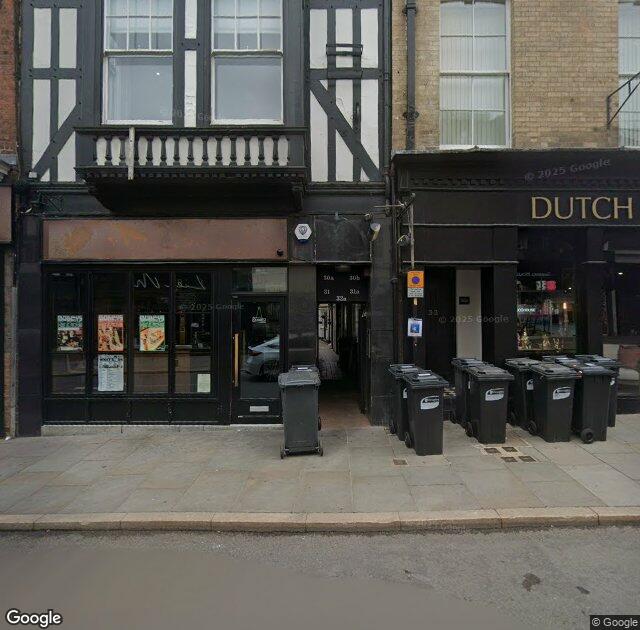
The Shrewsbury retailer traded in furniture, lighting and similar goods from premises at 32-34 Castle Street, Shropshire. It was incorporated on 10 December 2021, giving it a trading life of roughly four and a half years.
The resolution
The winding-up resolution was passed on 4 June 2026 and published in the London Gazette the same day. The company's registered office is listed as 32 Castle Street, Shrewsbury, SY1 2BQ, with its principal trading address at 32-34 Castle Street. The business operated under SIC code 47599, covering retail of furniture, lighting and similar items not elsewhere classified.
The company filed micro-entity accounts made up to 31 December 2025, with the next accounts due by 30 September 2027.
The liquidator appointment
The Gazette notice records the appointment of liquidators to Dutch Living Limited on 4 June 2026, coinciding with the resolution. The liquidation is confirmed as a creditors' voluntary liquidation. A liquidator's role is to realise the company's assets and distribute the proceeds to creditors in the order of priority set out in insolvency law.
No secured charges are registered against the company at Companies House, so there are no secured creditors with priority claims over its assets.
The directors
Two directors were in post at the time of the notice. Kirstie Maria Justice and Anna Lisa Jane Kayiatou were both appointed on 10 December 2021, the date of incorporation, and neither has a recorded resignation. Justice is resident in England; Kayiatou is recorded as resident in the United Kingdom. No other officers appear on the Companies House record, and the company has no prior registered names.
Common questions
Are you owed money by Dutch Living Limited?
In a creditors' voluntary liquidation you are an unsecured creditor unless you hold a registered charge or retention of title. The liquidators will write to known creditors with a proof-of-debt form. A statement of affairs prepared by the directors and the chair of the creditors' decision procedure should be available on request. Read more about proof of debt and where you sit in the creditor hierarchy.
Did you work at Dutch Living Limited?
In a CVL, employees are typically dismissed at or shortly after the liquidator's appointment. Wages owed up to a statutory cap, holiday pay, notice pay and redundancy may be claimable from the Redundancy Payments Service. The liquidators will normally provide RP1 case-reference numbers to the affected staff. See gov.uk: your rights if your employer is insolvent.
Do you hold a deposit, gift card or undelivered order from Dutch Living Limited?
Customers with paid-but-undelivered orders, gift cards or deposits rank as unsecured creditors in the liquidation. Where you paid by credit card and the amount was over £100, Section 75 of the Consumer Credit Act 1974 may let you claim from the card issuer for breach of contract or misrepresentation by the supplier; the rules apply per item, not per transaction, and the card must be a regulated credit card. Debit-card payments may be recoverable via chargeback.
Are you a director of a company connected to Dutch Living Limited?
Section 216 of the Insolvency Act 1986 applies the moment the company enters liquidation. If you intend to be involved in another company using the same or a similar name within five years, you must rely on one of the three statutory exceptions and file the relevant notice. Acting in breach is a criminal offence and exposes you to personal liability for the successor's debts.
Sources
- The London Gazette notice (code Appointment of Liquidators)
- Companies House record 13795098
- Editorial standards: how we source and review; five-pass pipeline.